Woods Manor is never quiet. Eleanor loves people by feeding them. Richard listens and does not try to mend anything. Julian arrives a moment before he is needed. Isla was seven, barefoot, holding a daisy chain, when she met the new girl at the gate, and she has not left her side since.
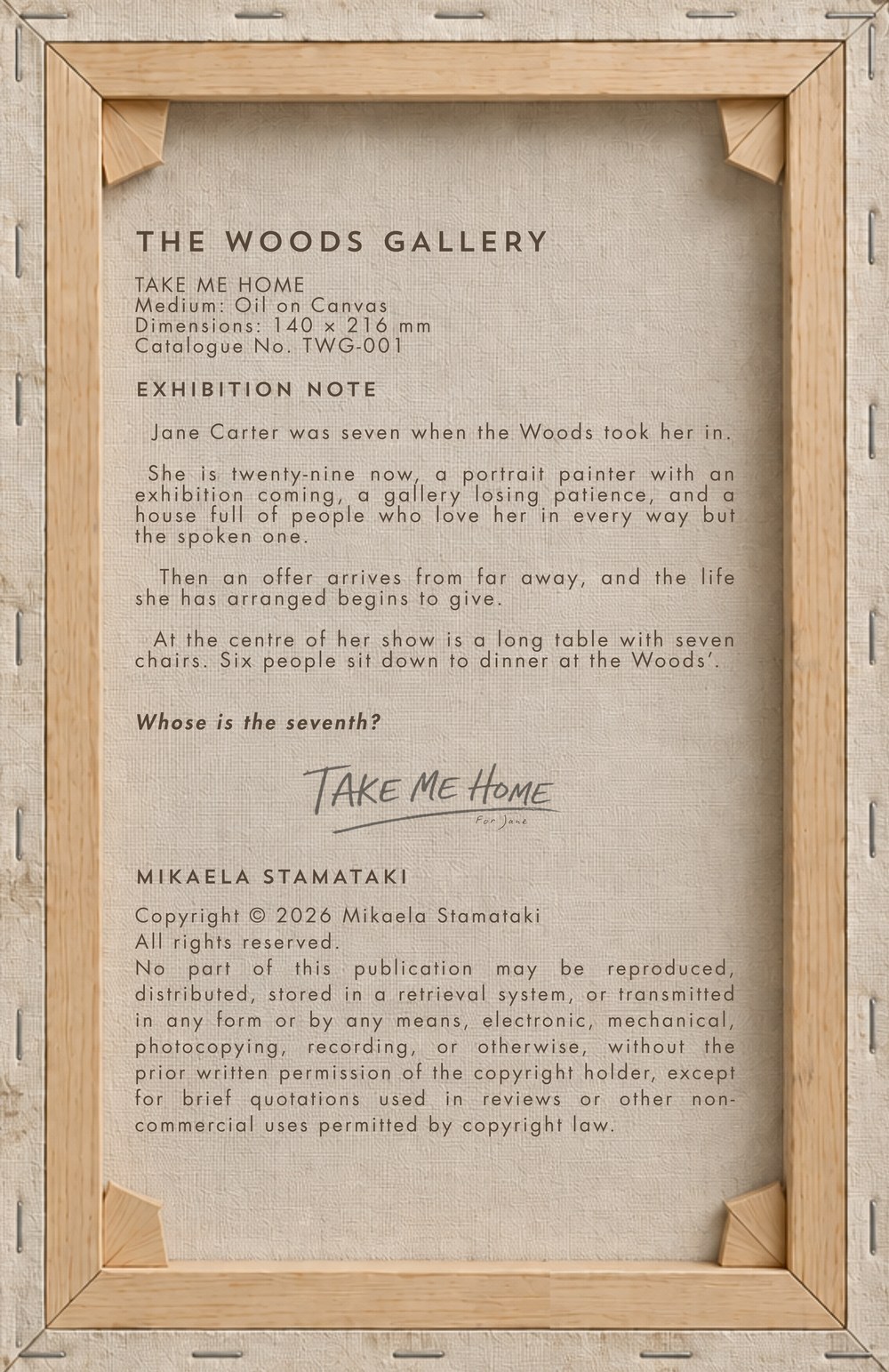
Jane Carter is twenty-nine now. She paints faces she has seen only for a moment, and she lives on Alder Street with Viktor Moore, whom she began arguing with as a teenager and has never entirely stopped. He notices everything and says almost none of it.
In a few weeks her work will hang at the Modersohn Gallery, which is losing patience. Then an offer comes from somewhere else, and the future she had imagined starts to shift.
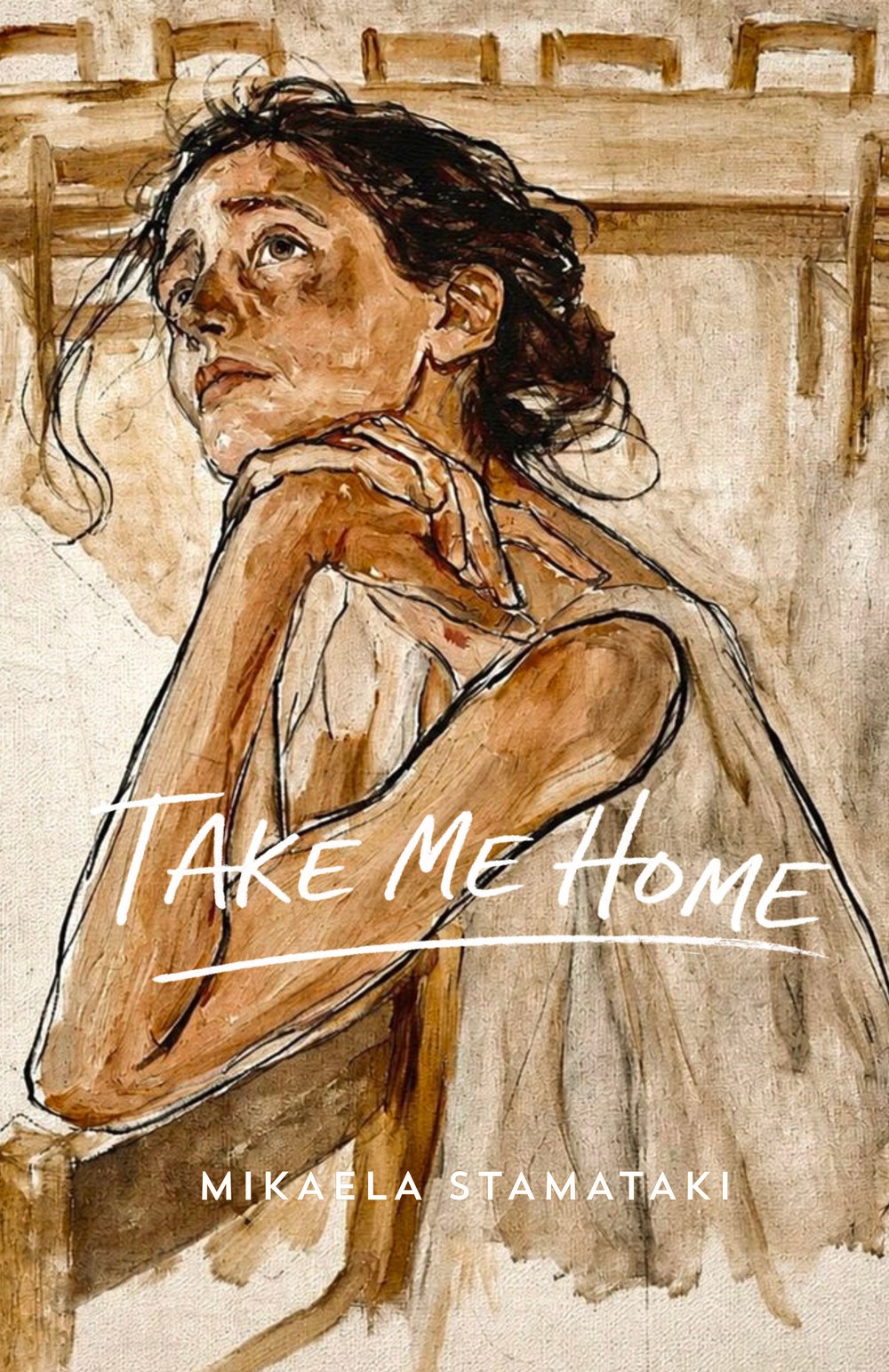
At the centre of the show is a long table with seven chairs. Six people sit down to dinner at the Woods’.
Whose is the seventh?
Everyone in her life is keeping a careful silence.
For readers of literary fiction and psychological drama.
Genre
Literary fiction
Format
Paperback, Hardcover and Kindle ebook (140 × 216 mm)
I made Maerd up for this book: a city of rivers, trams and galleries, tied together by a single transit grid, with a bridge where a man stops on his way home for eleven minutes and never says why. Somewhere inside it stands Woods Manor, with its front gate, its west lawn and an oak that is four hundred years old.
Saloia lies nine hours away by air. It is a city that decided beauty was an industry, with couture houses, auction rooms and two rival academies along the river, and it is meant to be the best place in the world to be a painter. Behind its oldest fortunes lies Nandira, a shipping country and a rich one.
From the author
Take Me Home is not my story, and Jane is not me.
But pieces of me live inside every character.
I understand Jane’s need to create beauty in places that only she can see. I understand Julian’s habit of making room for everybody else until there is very little room left for himself. I understand Isla’s instinct to carry the weight of a family while quietly setting aside her own. And I understand Viktor’s way of loving, with his whole heart, even when words fail him.
Mikaela Stamataki
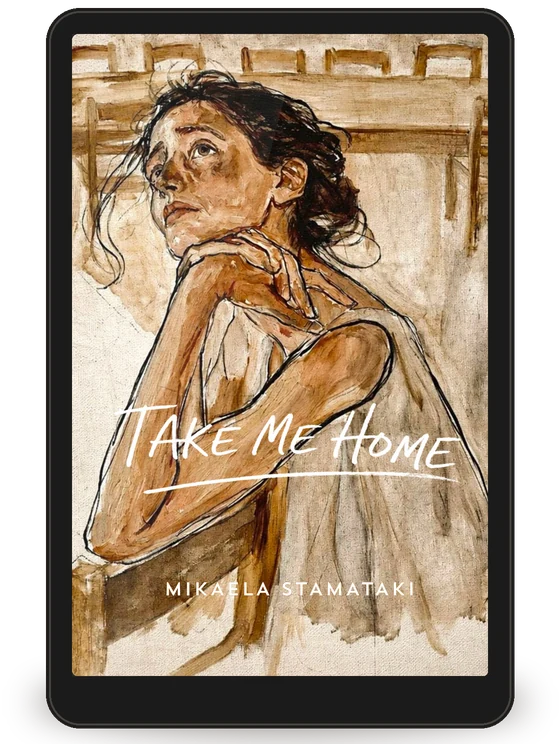
or click the book
The people
Meet the family.
Tap anyone to get to know them.
Swipe for more →
Jane CarterPortrait painterGet to know her +
Physical features
Dark hair, straight until the last hand’s width, where it changes its mind and curls
Almond-shaped eyes, the hazel of strong tea held up to a window
Blue paint under two fingernails
Habits
Tucks her hair behind her ear when she goes deep into a thought, and doesn’t know she does it
Finds the window first in every new room
Never puts anything back where she found it
Talks with both hands
Makes notes about light
“I put a face down correctly and then I take out the parts that are behaving.”
Viktor MoorePhysicistGet to know him +
Physical features
Tall and narrowly built
Dark hair that behaves for about an hour after it’s cut
Grey eyes behind thin black frames, pushed up with one knuckle
Habits
Eats the thing he likes least first, so the meal improves as it goes
Warms the cups first, because cold porcelain steals the first sip
Answers every telephone with his surname
Opens the door on the second knock
Won’t use a telephone while walking: that is two things done badly
“The equations were true before anybody wrote them down. We are archaeologists, not authors.”
Isla WoodLoud, professionallyGet to know her +
Physical features
A great deal of curly russet hair that escapes whatever has been done to it
Grey eyes that miss nothing
A quick face that goes through three expressions on its way to a fourth
Habits
Leaves one shoe untied
Takes her complaints down to the oak at the bottom of the lawn
Counts things nobody asked her to count
Announces the weather like breaking news
Wears her dresses as though she won them in an argument
“You’re allowed to want things, you know. It’s not against the law. I checked. I check a lot of laws.”
Julian WoodEngineerGet to know him +
Physical features
Tall and broad-shouldered
Golden-brown hair, one piece always down on his forehead
A half-smile that talks council committees round
Habits
Exact in everything: his sentences, his cuffs, the length of his pauses
Rides in front, because somebody ought to be looking at the road
Disappears behind a book before breakfast has properly ended
Puts the book down for a good sentence
Never raises his voice
“The best decisions are rarely made. They’re noticed.”
Eleanor WoodOwns five flower shopsGet to know her +
Physical features
Tall, with a posture that makes everyone else sit up
Silver-brown hair, pinned back as if it has never once been out of place
A small tightening at one corner of her mouth: amused, or something is wrong
Habits
Her hands are never still: a lapel, a place card, a strap
Hums, never the same tune twice, and never one that exists
Feeds the people she loves past the point of comfort, and everybody else exactly enough
Fresh flowers every Tuesday, stems cut two inches on the diagonal
Under-salts the soup, on the theory that people can see to that themselves
“In this house, you are allowed to have been hurt without also having to be sorry about it. It takes people a while. You may take as long as you need.”
Richard WoodWorks at the city councilGet to know him +
Physical features
Big and quiet, and takes up exactly his share of a room
Grey from the temples back
Creases at the eyes that start to move a second before he smiles
Habits
Lowers his newspaper two inches when something matters
Taps the barometer every morning: a private argument with the weather
Plays chess with a cork and a brass screw standing in for two lost pawns
Listens, then waits a beat in case there is more
“Anybody can carry a thing for somebody. The difficult part is standing there with your hands empty while they carry it, and not going anywhere.”
From the pages
Lines to keep.
Pull a line
They tell you grief will be large, and it is large. What nobody mentions is that it is also ordinary.
Swipe for more →
They tell you grief will be large, and it is large. What nobody mentions is that it is also ordinary.
Take Me Home
Grief does not live in the objects. It lives in the habits.
Take Me Home
A chair is only empty if somebody was supposed to be sitting in it.
Jane
Take Me Home
You cannot resent a man for loving well the person you love.
Take Me Home
“If I stand up in this room and say one sentence with her name in it, I’m finished here. And you are still on the stairs.”
Theo
Take Me Home
Anybody can love a thing at its best. The question is what you are willing to be bored by.
Take Me Home
Surviving somewhere is not the same as belonging to it.
Take Me Home
“In this house, you are allowed to have been hurt without also having to be sorry about it.”
Eleanor
Take Me Home
“My dear, children are never bothers.”
Eleanor
Take Me Home
There are silences you honour and silences you interrogate, and the whole art of loving people is knowing which is which.
Take Me Home
The silence between strangers asks for words. The silence between sisters rarely does.
Take Me Home
Hope is heavier to carry than resignation. Resignation asks nothing of you. Hope asks everything, every hour, and gives you nothing to do with your hands.
Take Me Home
He was aware that waiting is sometimes a form of cowardice, and that the line between patience and cowardice is not visible from inside the man standing on it.
Viktor
Take Me Home
“Go to the bridge, Julian.”
Viktor
Take Me Home
You do not find out what a thing cost you until you stop paying for it.
Take Me Home
A woman who has stopped complaining has stopped doing something else as well.
Isla
Take Me Home
Being right is a private condition. Being published is a public one. The world has no instrument for telling them apart.
Viktor
Take Me Home
Beauty that tries is a different species — anxious, over-arranged, forever checking whether you have noticed.
Take Me Home
“It’s a small town, Viktor. People talk. Mostly me.”
Isla
Take Me Home
“It is an extraordinary hour and I want you to know I don’t care.”
Isla
Take Me Home
“Wonderful. There are two of them now. The house has been colonised by sentences.”
Isla
Take Me Home
“We have a tortoise. His name is Alarming and he lives under the hydrangeas and Dad feeds him lettuce and denies his existence to Mum because Mum said no more animals after the ferret.”
Isla
Take Me Home
Ten questions about you
Which one are you?
No spoilers. No trick questions. No wrong answers (well, maybe one). Just ten small questions about how you live, and at the end you find out who in Take Me Home you’d be. Could be a painter. Could be a physicist. Could be a tortoise. Answer honestly. Isla will know if you don’t.
Your answers, by trait
Outgoing
Warm
Orderly
Imaginative
Says it out loud
Steady
You are most like
Jane Carter
The painter
You notice everything and ask for almost nothing. You find the window first in every room, you read faces the way other people read letters, and you would carry a great deal before asking anybody to help. Somebody should put more on your plate.
She reached conclusions before she could account for them, and her face went on ahead to tell you.
You are most like
Viktor Moore
The physicist
You love in systems: the curtains opened in the right order, a sandwich left at exactly the right angle. You will never say it the short way, but you will always say it accurately.
“Now neither of us is the person who spilled the wine.”
You are most like
Isla Wood
The sister
You are the reason the room doesn’t go quiet. You count things nobody asked you to count, you miss nothing, and you would deny under oath that you planned any of it.
Isla Wood was loud constantly, professionally, as a service to others.
You are most like
Julian Wood
The brother
You see what people need a moment before they do, and you’d be mortified to be thanked for it. You make room for everybody. Leave a little for yourself.
“I notice things. It’s a hostile talent.”
You are most like
Eleanor Wood
The mother
You say love with a serving spoon and would sooner die than use the verb. Nobody leaves your table hungry, and nobody stays a guest at it for long.
“I have four children and I am not on any of their sides. It is extremely inconvenient and I do not recommend it.”
You are most like
Richard Wood
The father
Quiet, patient, and never once not paying attention. You do your best work from behind a newspaper, and people tell you things without knowing why.
Supervision, he says, is best performed seated.
You are most like
Maren Nwaneri
The sculptor
Big-hearted, quick, and connected to everyone. You walk into a room and make things happen for people, and you’re the first to say what everybody else was only thinking.
“I mean where are you from. The place you think about when you’re homesick.”
You are most like
Theo
The precise one
Private, exact, and impossible to flatter. You say less than anyone in the room and mean all of it. People learn to listen for your silences.
“Mm,” he said. Which was the closest Theo came to saying yes.
You are most like
Alarming
The tortoise
Unhurried, unbothered, and officially does not exist. You take forty minutes to reach a decision you could have made at the top of the lawn, and you are always right to.
Alarming took everything well. That was the entire basis of the relationship.
You are most like
Corwin
The collector
You have an eye, and you like to be the one who spotted it first. Leave you a little room and you’ll arrive at the right conclusion entirely on your own.
“The large one has no manners.”
You are most like
Marguerite Sallow
The delightful talker
Generous with your hands, your stories and your ‘darlings’. People leave a conversation with you smiling, and knowing a great deal about your plumbing.
“The plumbing. You cannot imagine. They found a cistern.”
You are most like
Katerina Sarn
The journalist
Quick, sharp, and better at your job than most people are at theirs. You can tell in nineteen minutes what others take a year to notice.
“You can always tell the ones who came to enjoy themselves.”
You are most like
Clara
The historian
Clever, plain-spoken and allergic to anything left unsaid. You notice everything, and you would rather say it out loud than be polite about it.
“I’m not finished being wrong about you.”
You are most like
Margot
The night-shift dreamer
You love other people’s lives. You notice the small rituals strangers keep, and you’d paint the end of the evening if you could.
“I have decided he knows perfectly well it isn’t the Hollands.”
Behind the book
How it was written.
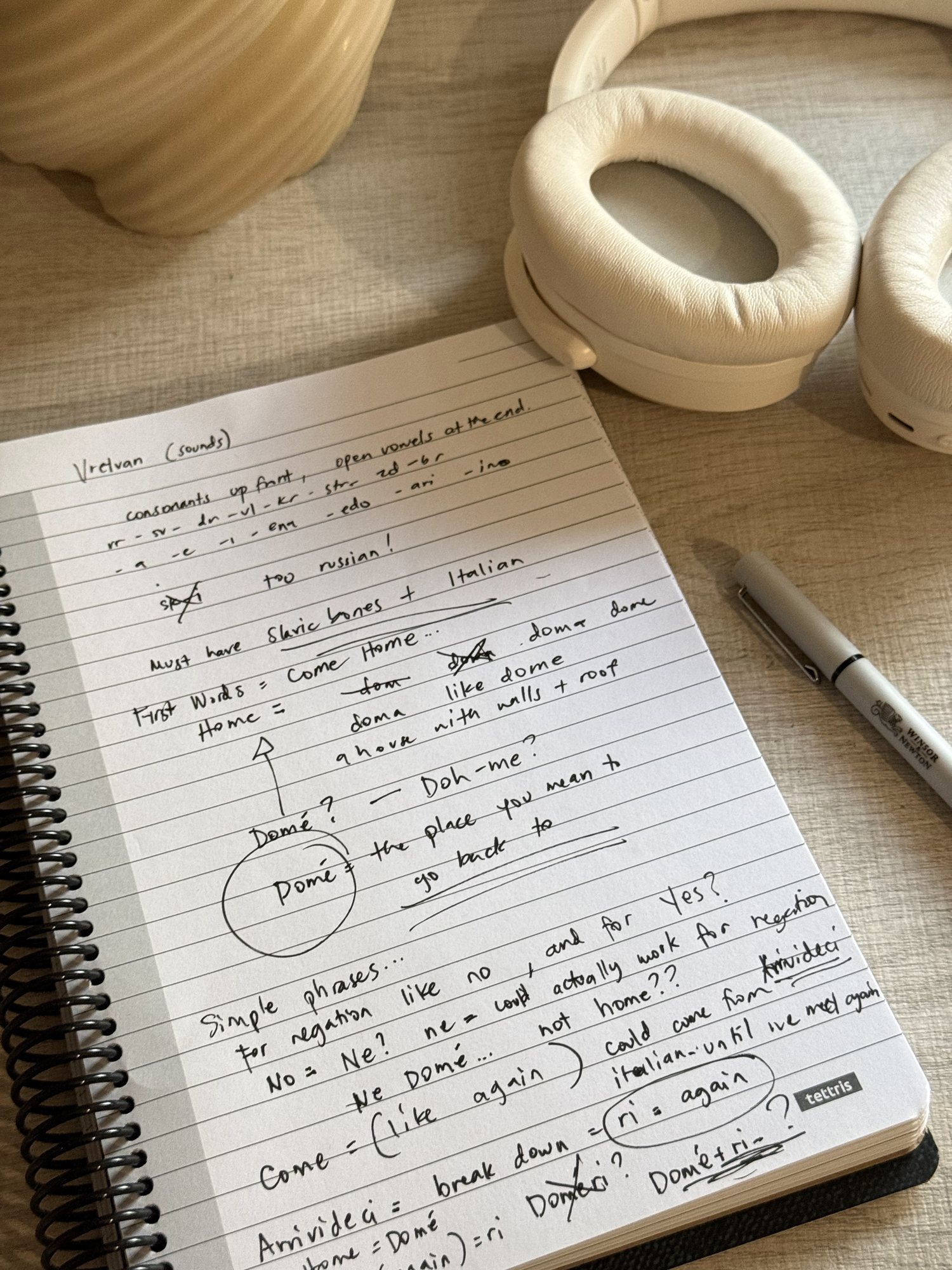
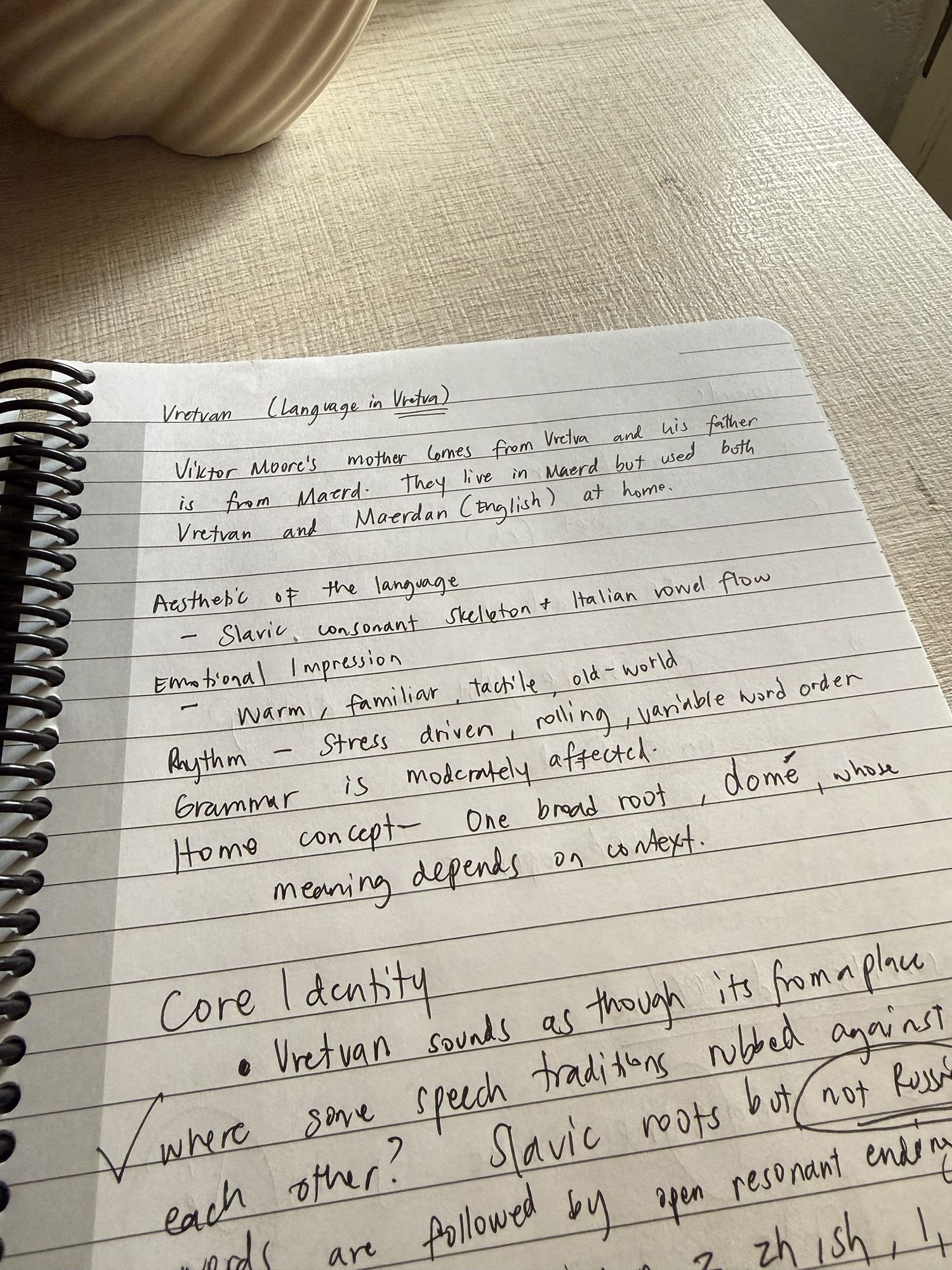
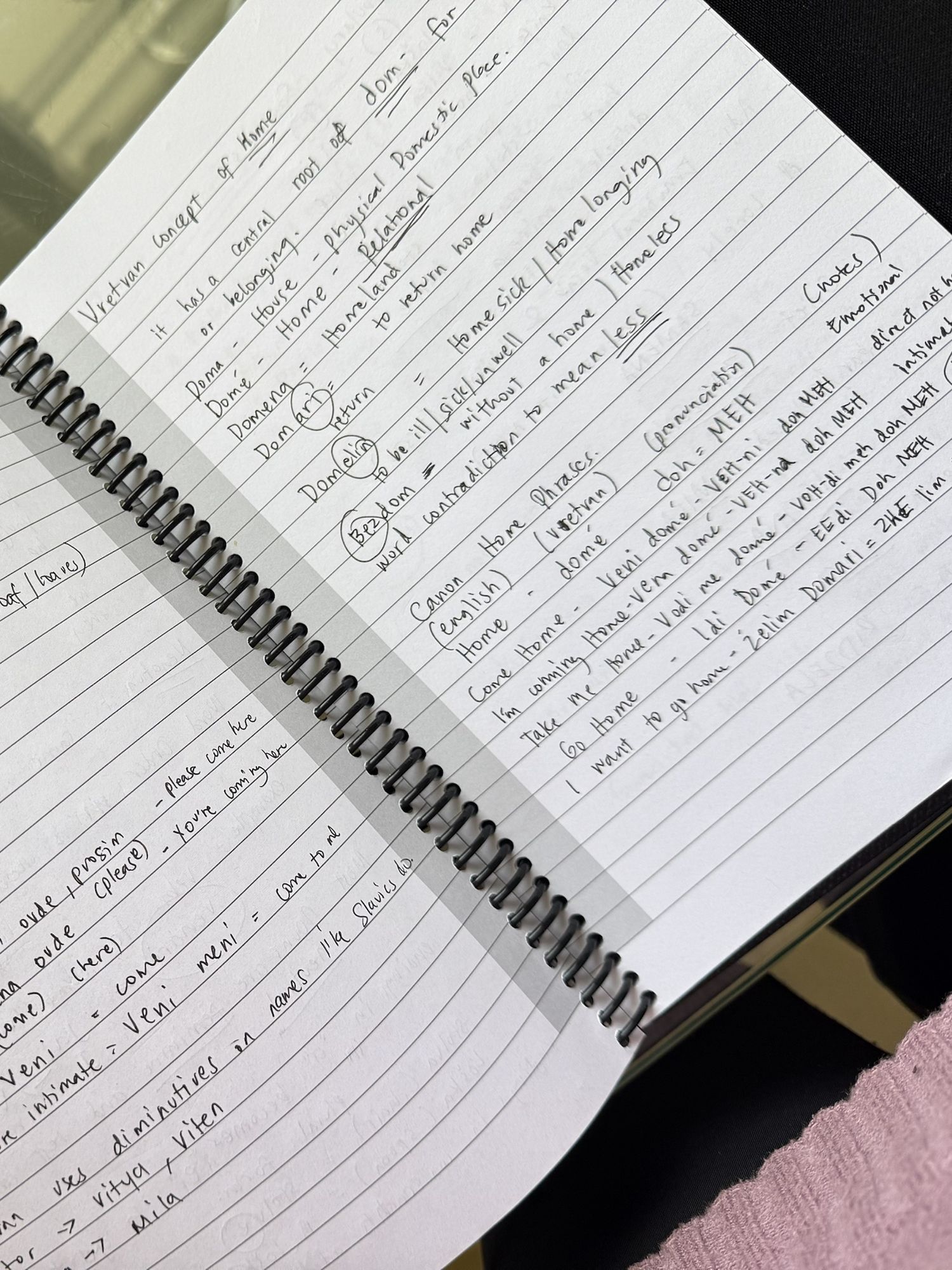
Most of Take Me Home was written between midnight and six in the morning, while the house slept and music played in my headphones. Every chapter has its own songs, and you can hear some of them in The songs. The ideas never came at the desk, though. They arrived while I was looking out of the window at nothing in particular, or standing up to my elbows in the dishes. Before I wrote a single word, I fell down the conlang rabbit hole and built Vretvan, the language of Viktor’s mother: Slavic in its bones, with soft, Italian vowels at the end, and just big enough for the words that matter to his family. You can try a few in Speak Vretvan. Take Me Home was planned as the first of three books, and the other two are already drafted. For now they’re resting on the shelf while I write Honey, You’re Familiar and Letters from Kiko.
The songs I wrote to
Feel it through the songs.
These were playing in my headphones while I wrote it, somewhere between midnight and 6am. Press play and let the book pick one for you: thirty seconds, a chapter, and a little note from me.
A note from me
Tap the record
The songs I wrote to
The Take Me Home playlist
Every chapter had its own music in my headphones. Listen before, during or after reading.
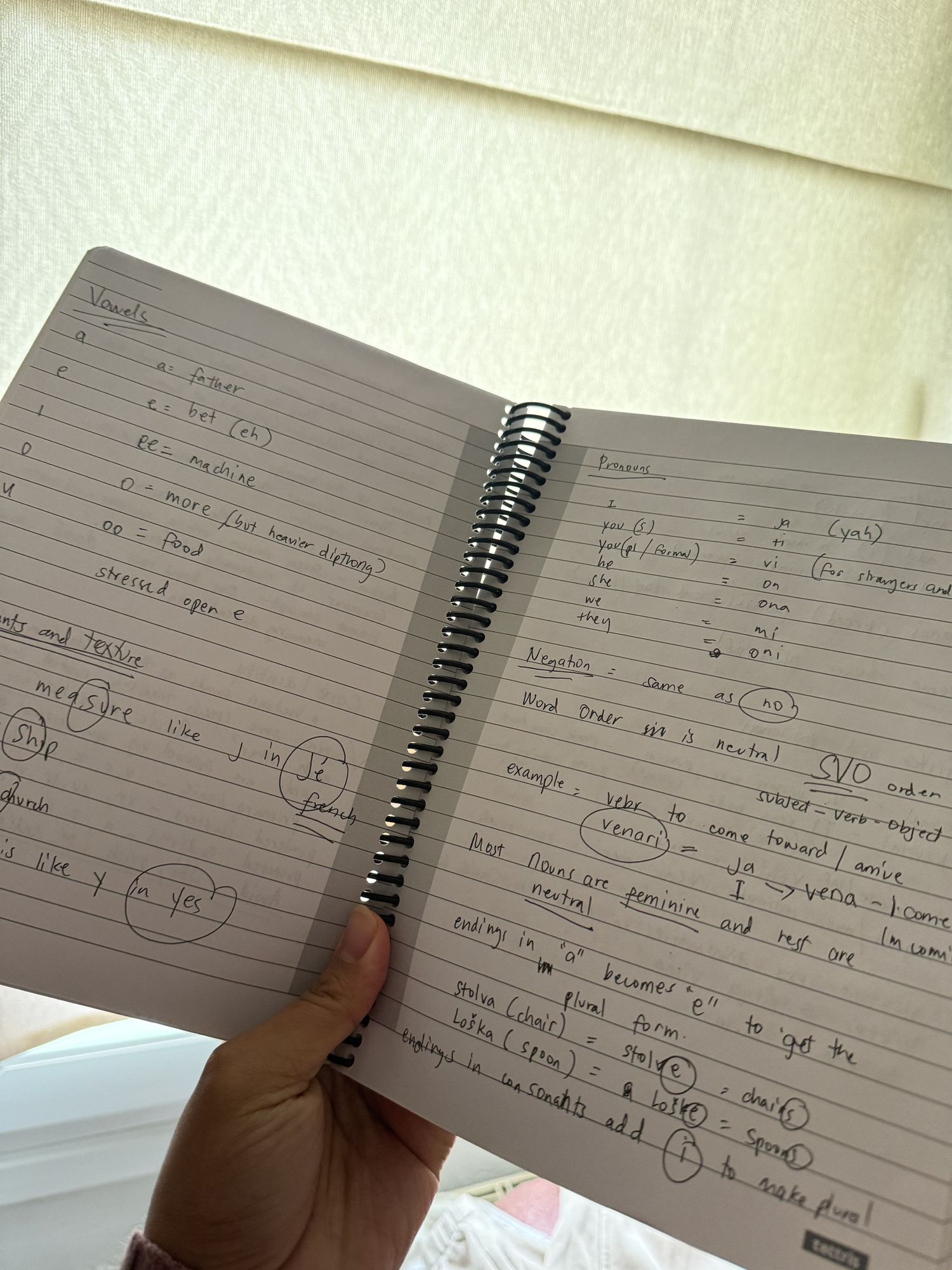
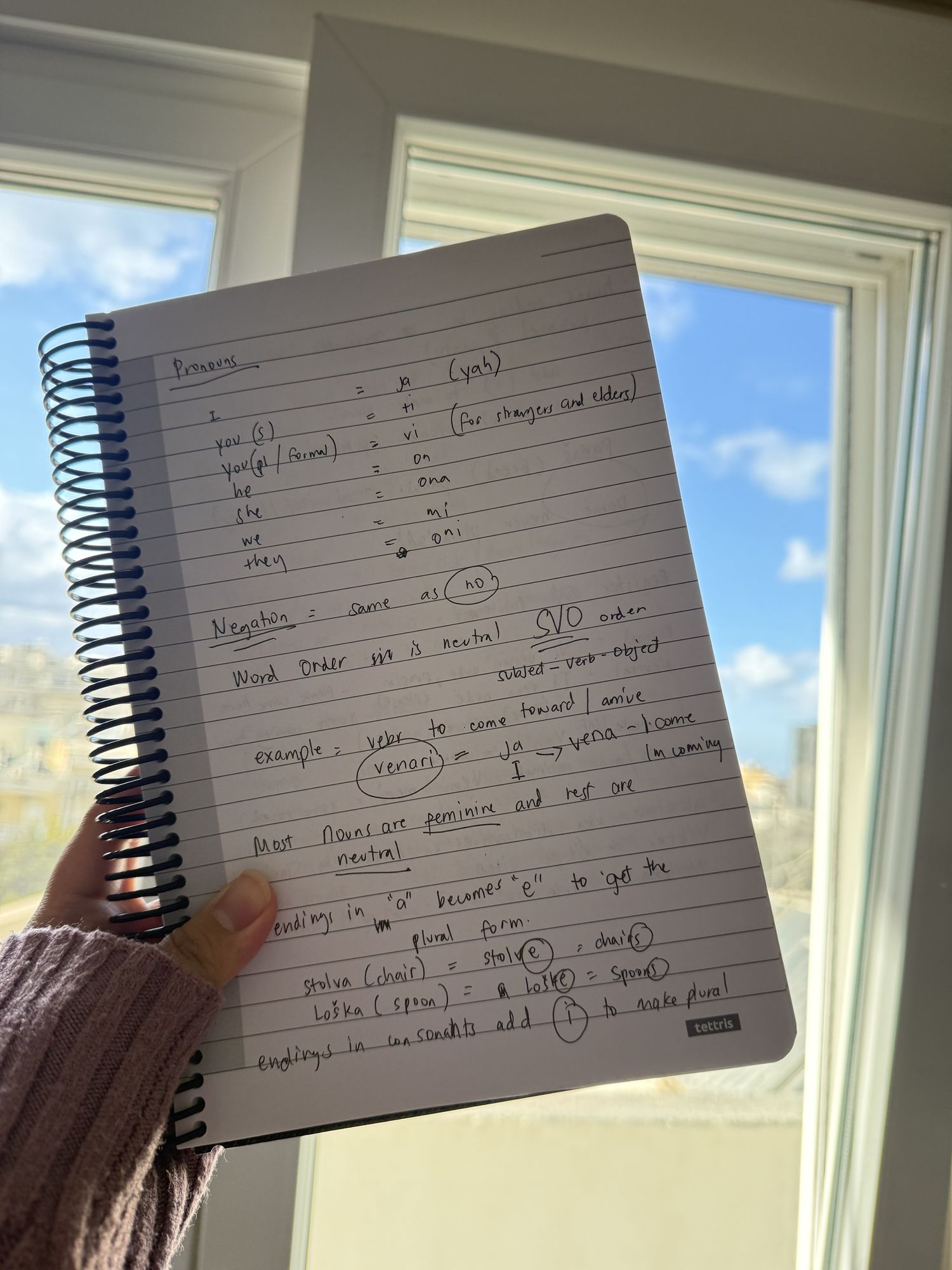
Viktor grew up between two languages: Maerdan for school and the street, and Vretvan, his mother’s, for the kitchen, for reprimands called from another room, and for songs she never finished. Vretvan is warm and rolling: consonants up front, open vowels at the end.
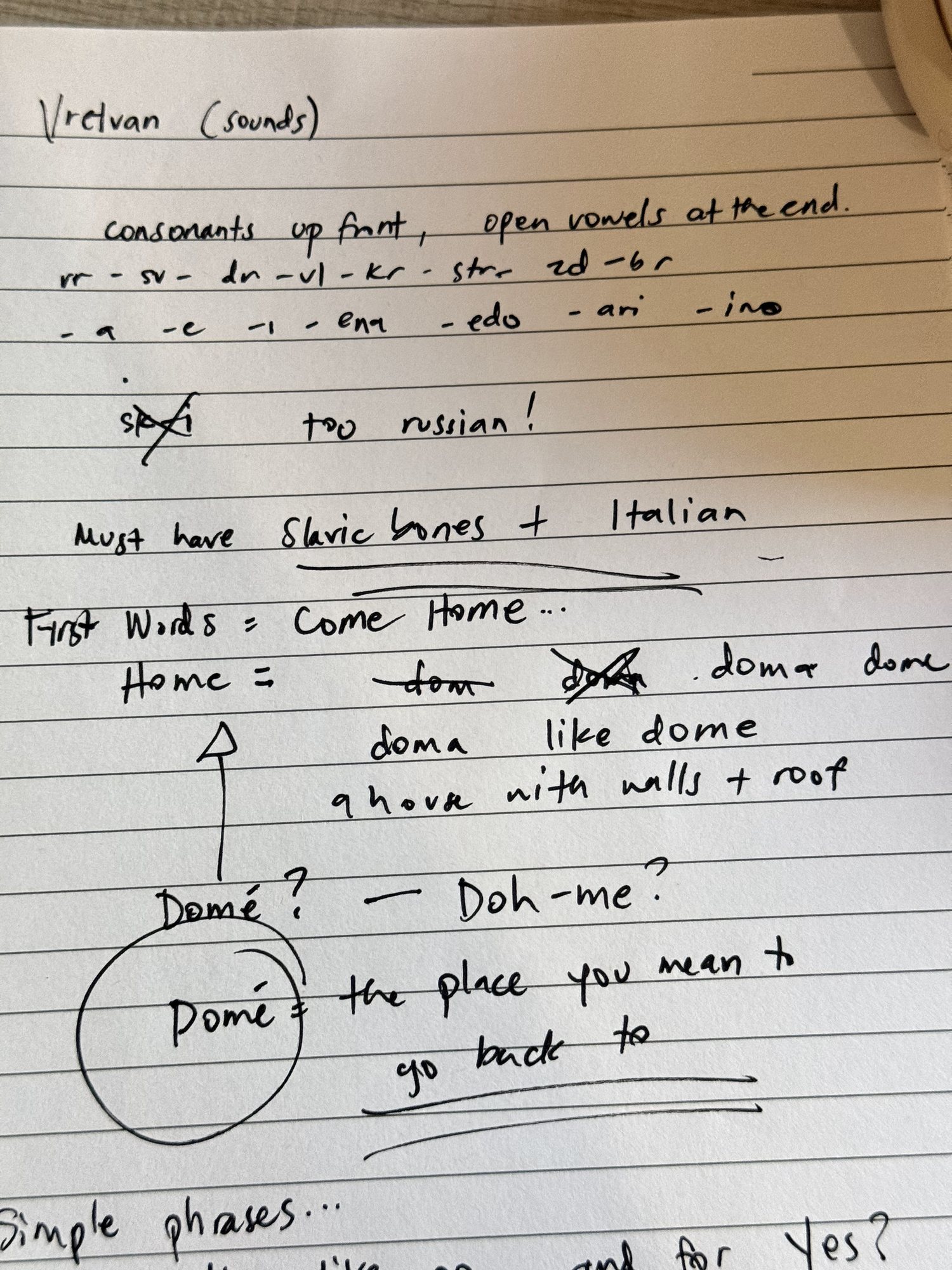
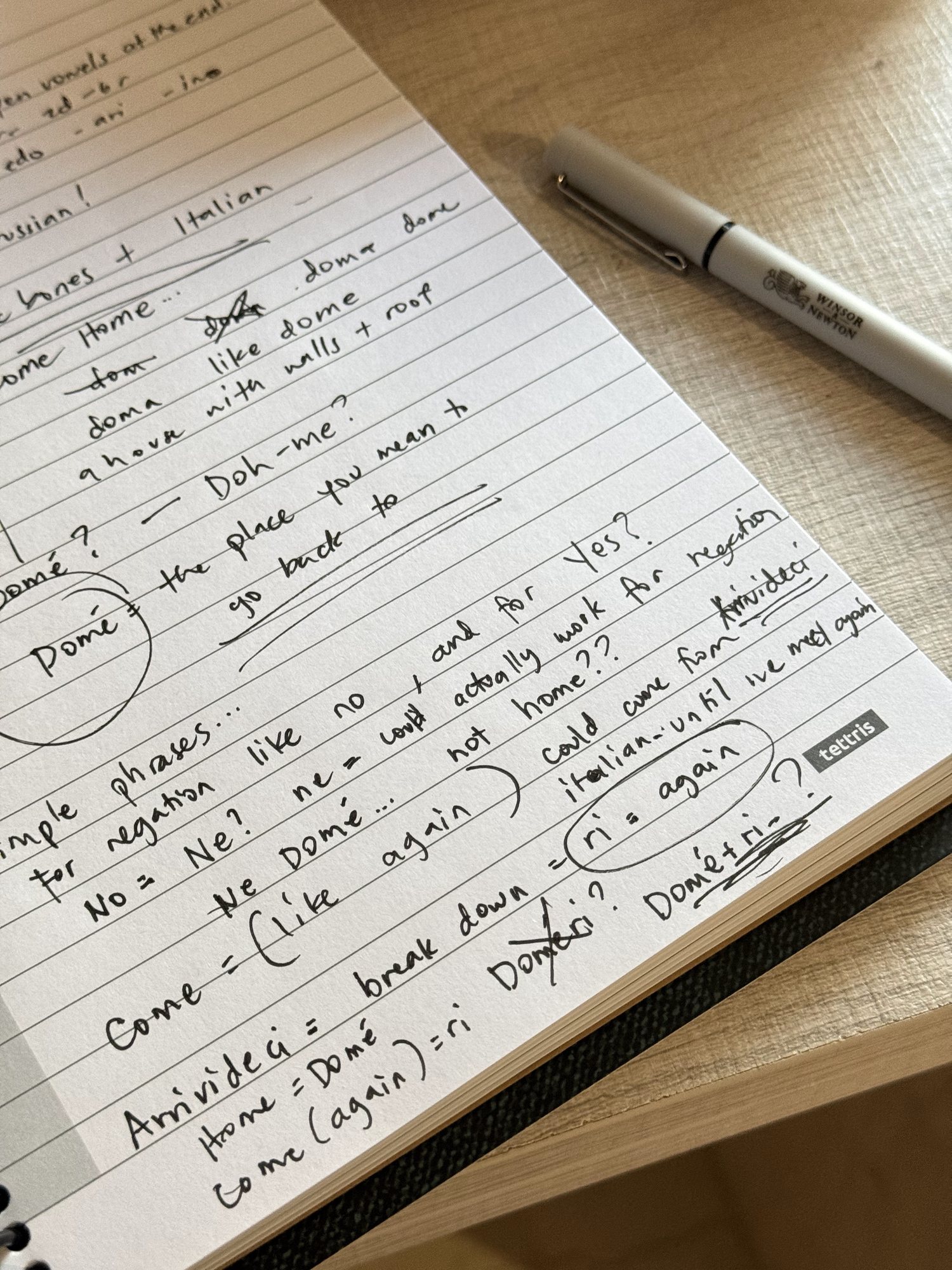
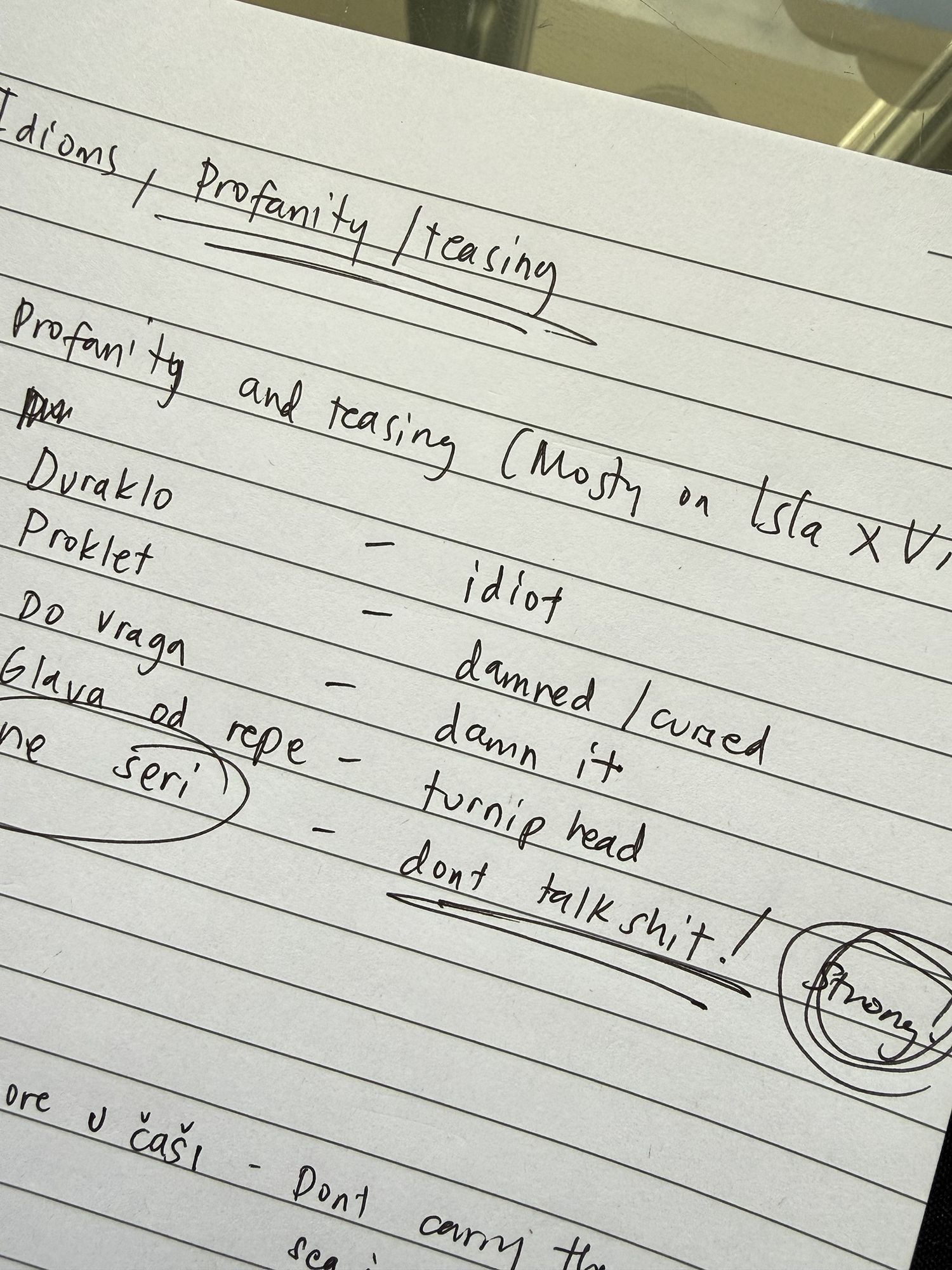
See pages from my notebookClose the notebook8Pages from my own Vretvan notebook.
It started with Viktor.
I first imagined Viktor as the son of parents from two different countries. It shaped the way he speaks, the accent that slips into some of his words, and the clever mind of someone who grew up with two languages. Then it became something more: a little language Jane would learn, and that Isla, nosy as ever about her family’s business, would pick up a few words of, just for fun.
The first word was a place.
Before any grammar, before hello, there was Vretva: the place I invented for Viktor’s mother to come from. The language took its name from there.
Slavic, but Italian.
The sound came from the way I always imagined Viktor would look: Russian and Slavic, mixed with Italian. That became my only real test. If a word sounds Slavic but Italian, it’s Vretvan. If it just sounds Russian, it gets crossed out. (My notebook has a lot of crossings-out.)
Then I lost my sleep.
So I did what any reasonable person does at midnight: I looked up how languages are built. That was the end of my sleep. I had fallen into conlang, the world of constructed languages, where people happily argue for pages about one vowel. I fit right in.
My favourite word.
Domé is home, the place you mean when you are going back to it. I’m not going to tell you how long that took. Vretvan only had to be big enough for the words that matter to Viktor’s family: come home, have you eaten?, I love you, and what you call someone you love when they’re being a turnip-head. But to make those few words feel real, I had to build everything underneath them: the sounds, the rules, the sayings. Most of it never appears on the page. It’s there anyway, holding things up, like the walls of a doma.
Now it’s your turn.
I hope you leave this page feeling a little smarter, because you’ve just started learning a language nobody else in the world speaks. Pick a group above and try a few words.